
Before I knew it, I am about to hit ten years at NVIDIA. I want to use the occasion to share how my career went over that decade and to offer this year's graduates some personal advice.
Choice Beats Effort
You often have to admit that in a career, the choice you make counts for far more than how hard you work. Looking back ten years from where we are in 2021, nothing was hotter than the internet industry. It is true that the past decade made one newly rich person after another in that industry, but for a fresh graduate just starting out, walking straight into the hot internet industry was not a good choice. No matter how much money the company has, new graduates are front-line staff working 996, and it is hard for them to take a share of what the early employees with piles of options and stock already hold.
Picking an emerging industry has more upside, and even some new business models that look unreliable can be a decent choice, like blockchain, which was just taking off back then. The other side of that is looking for a new niche inside a "traditional" industry, like AI chips within the chip industry, or electric vehicles within the car industry.
Picking an industry always has a gambling element, and that is where another factor matters a lot: your own interests. Interest is a major driver of a career, and it helps you pick a direction you both like and are good at. Most of the top creators in the short-video boom, for example, started from a hobby and ended up at the center of the wave.
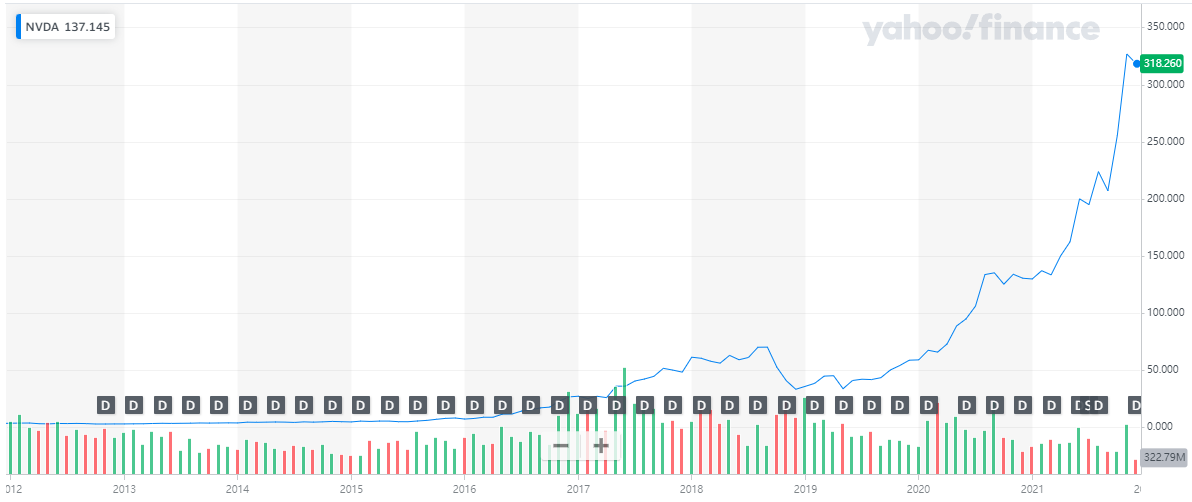
From my years at NVIDIA, because the company picked the right technical path (GPGPU), more and more technologies and applications went from fantasy to reality. As large-scale AI applications reached every part of daily life, NV's stock went up close to 100x in ten years. That is a textbook case of choice beating effort.
Playing the Long Game
Like long-term thinking in investing, one big factor in career success is how you accumulate industry experience over time and keep improving. The mistake young employees a few years in are most likely to make is rushing to change jobs. In fact, after three or four years, there are usually more opportunities inside your company than outside it. As part of career planning, after a few years you need to think about whether you are better suited to going deeper on the technical side or moving gradually toward management. Either way, you should look for the opportunity inside your current company first. A new product, a new project, even a routine reorg can turn into an important opening for what comes next.
The other side of long-term thinking is sticking to doing the "right things". Once you have settled on a direction, persistence matters a lot, and often believing in yourself and keeping at it is the only way to avoid regret. In career terms, no effort is wasted: connections, resources and experience all take a long time to build.
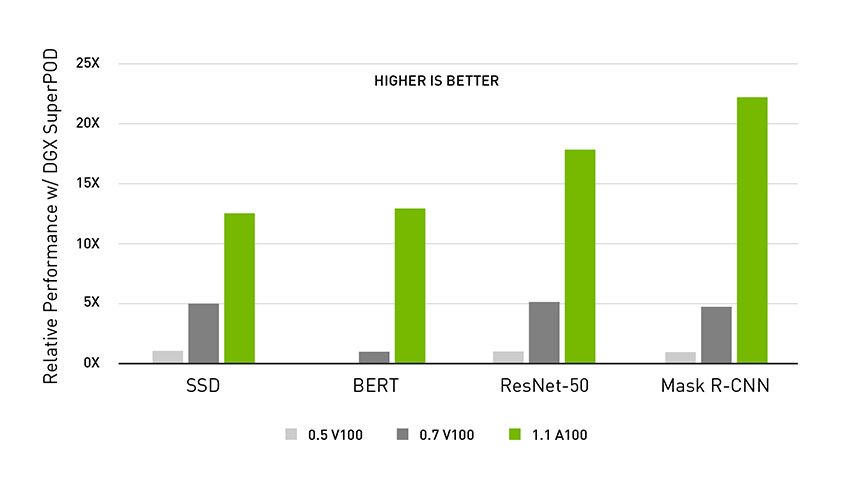
The NVIDIA group I work in, for instance, has spent years accelerating all kinds of computing applications, from the early high-performance computing business to deep learning training and inference later on. The algorithms changed, but the methodology and the technical path never wavered. That long accumulation of acceleration expertise paid off well, and it turned into ever higher GPU sales.
Pick Teammates, Grow Together
Good products depend on teamwork, and picking your teammates is its own art. New graduates in interviews mostly answer the interviewer's questions and rarely start a conversation of their own. In practice, the person interviewing you is usually going to be your colleague, and learning early about the team and the people you are joining helps a lot when you choose a company.
I remember when I interviewed at NV, what struck me most was how nice the interviewers were. The interview felt more like a technical discussion than a plain coding test. Through those conversations I also learned what the group worked on and what its technical direction was, and that played a decisive part in my decision to join NV.
Over the following years the business expanded fast and the team grew fast with it, going from a group of ten to more than a hundred people almost overnight. At the same time, more and more new algorithms and techniques poured into the scope of our work. Keeping up with the pace of the industry and of the team became more and more important. And as the team grew quickly, finding new colleagues who shared the same goals became very hard. Fortunately we never lowered our hiring bar because the business was expanding. By targeting the right candidates and setting up a sensible interview process, we did build a high-caliber team. A good team attracts good people, and that gradually turned into a virtuous cycle.
Closing
If you have read this far, agree with me, and are interested in what we do, you are welcome to send in a resume and apply for our openings. Both experienced and new-graduate hiring are open on an ongoing basis. Follow the NVIDIA WeChat account to see the positions and apply.